Winter Savings up to 20%!
Save Thousands with Professional Installation Tips

Save Thousands with Professional Installation Tips
Surface preparation represents the foundation of every successful epoxy installation, yet it remains the most commonly overlooked step in the process. Many property owners believe a quick sweep and rinse will suffice, only to watch their investment bubble, peel, or delaminate within months.
The concrete surface must be properly profiled to create the mechanical bond necessary for epoxy adhesion. This requires removing all contaminants including oil, grease, existing sealers, and laitance (the weak, dusty layer on concrete surfaces). In Springfield’s fluctuating humidity conditions, moisture testing becomes particularly critical, as trapped moisture will prevent proper curing and cause coating failure.
Professional surface preparation includes diamond grinding or shot blasting to open the concrete pores, followed by thorough cleaning and moisture vapor emission testing. Attempting to save money by skipping these steps typically results in complete coating failure, requiring removal of the failed epoxy and starting over at double or triple the original cost.
The Missouri climate presents specific challenges with seasonal temperature swings and humidity variations. Concrete surfaces expand and contract with these changes, and improperly prepared substrates will not accommodate this movement. Testing for concrete strength, pH levels, and moisture content prevents costly failures down the road.
The temptation to purchase budget epoxy kits from big-box retailers proves irresistible for many property owners, but this decision consistently leads to disappointing results and costly replacements. Not all epoxy products deliver equivalent performance, and the quality difference between professional-grade and consumer-grade materials becomes painfully obvious over time.
Consumer-grade epoxies typically contain higher solvent ratios, thinner coatings, and lower solids content. These formulations lack the chemical resistance, UV stability, and wear resistance necessary for long-term performance. Within a year, you may notice yellowing, hot tire pickup in garages, or chemical staining that penetrates the coating.
Professional epoxy systems use 100% solids formulations with superior cross-linking chemistry. These materials cost more upfront but deliver decades of performance rather than months. The difference in material quality directly impacts thickness, hardness, chemical resistance, and overall durability.
Consider the complete system rather than just the base coat. Quality installations require compatible primers, proper base coats, and appropriate topcoats formulated to work together. Mixing products from different manufacturers or quality tiers creates weak points in the system that will fail under normal use conditions. For flooring applications that demand lasting performance, material quality cannot be compromised.
Epoxy chemistry depends entirely on temperature and humidity falling within specific ranges during application and curing. Installing outside these parameters guarantees problems ranging from improper curing to complete coating failure, yet many installers proceed regardless of conditions.
Most epoxy systems require substrate temperatures between 50 and 90 degrees Fahrenheit, with ambient temperatures in a similar range. Equally important, the substrate temperature must remain at least 5 degrees above the dew point to prevent moisture condensation during curing. In the Greene County area, morning dew and evening temperature drops create challenging conditions that require careful timing.
Temperature affects more than just curing time. Cold temperatures slow the chemical reaction, potentially preventing full cross-linking and leaving a soft, tacky surface. Excessive heat accelerates the reaction, reducing working time and potentially causing the material to kick off in the container before application completes. High humidity can cause blushing (a milky appearance) or prevent proper adhesion.
Professional installations include environmental monitoring before, during, and after application. This means checking substrate temperature with infrared thermometers, monitoring ambient conditions, and calculating dew point. Scheduling work during stable weather windows prevents the majority of application-related failures. Springfield’s spring and fall seasons offer ideal conditions, while summer heat and winter cold require additional precautions and climate control measures.
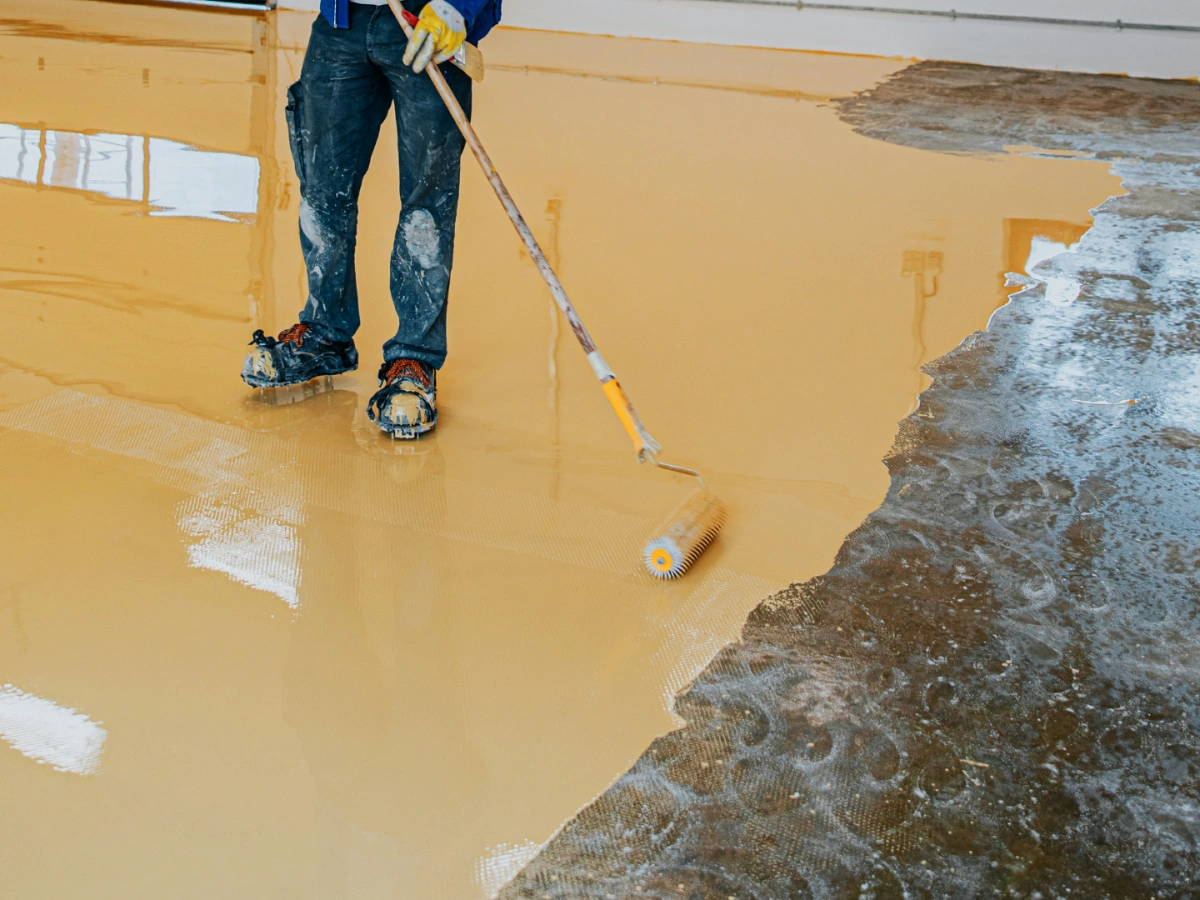
Achieving the proper chemical reaction in two-part epoxy systems requires precise mixing ratios and thorough blending. Eyeballing measurements or inadequate mixing creates weak spots that will fail prematurely, while improper application techniques result in uneven coverage, thin spots, and aesthetic defects.
Epoxy components must be measured by volume or weight according to manufacturer specifications, typically using calibrated containers or scales. Deviating from the specified ratio, even slightly, prevents complete curing. Part A and Part B must be mixed thoroughly for at least three minutes using a low-speed drill and paddle mixer, scraping sides and bottom to incorporate all material.
Application thickness matters tremendously. Spreading material too thin leaves insufficient coating to bridge imperfections and provide adequate protection. Applying too thick wastes material and increases the risk of excessive heat generation during cure, which can cause cracking or delamination. Professional installers use calibrated gauge rakes or notched squeegees to achieve consistent mil thickness across the entire surface.
Rolling technique also impacts the final appearance. Using the proper nap roller, maintaining a wet edge, and back-rolling to eliminate bubbles and ensure uniform thickness requires skill and experience. Overlapping at the wrong time creates visible lap marks, while waiting too long prevents proper fusion between sections. Working systematically with proper tools prevents these common application errors that compromise both appearance and performance.
After investing time and money into proper preparation and application, many property owners sabotage their installation by returning the floor to service too quickly. Epoxy coatings require specific cure times to develop full strength, hardness, and chemical resistance, and premature loading causes permanent damage.
Understanding the difference between dry to touch, dry to foot traffic, and full cure proves essential. Most epoxies feel dry within 24 hours but have not achieved anywhere close to full strength. Light foot traffic may be possible after 24 to 48 hours, but vehicle traffic, heavy equipment, or chemical exposure requires waiting the full cure period, typically 5 to 7 days.
Temperature directly affects cure time. The warmer the environment, the faster the cure, while cooler temperatures extend the necessary wait time significantly. A coating that cures in three days at 75 degrees might require a week or more at 55 degrees. Rushing this process by placing heavy loads or exposing the surface to chemicals before full cure weakens the coating permanently.
Missouri’s variable conditions mean cure times shift with the seasons. Summer installations cure faster but require temperature management to prevent too-rapid curing during application. Winter projects need extended cure schedules and potentially supplemental heating. Following manufacturer guidelines for cure schedules based on actual substrate and ambient temperatures ensures the coating develops its designed performance characteristics. Professional teams at businesses specializing in concrete floor solutions understand these timing requirements and schedule projects to accommodate proper curing without rushing critical chemical processes.
Working with experienced professionals eliminates these costly mistakes entirely. The team brings years of expertise in surface preparation, material selection, environmental management, application technique, and cure scheduling. Every installation receives proper moisture testing, diamond grinding, professional-grade materials, climate-controlled application conditions, and adequate cure time before returning to service. This attention to detail prevents the failures that plague amateur installations and delivers floors that perform beautifully for decades. Whether you need garage floor coatings, commercial facility upgrades, or decorative concrete finishes, trusting qualified professionals protects your investment and ensures results that exceed expectations. For guidance on your specific project or to schedule a consultation, visit our contact page to connect with flooring specialists who prevent these expensive mistakes before they happen.